Al-Qaeda’s African affiliate has encircled Mali’s capital and U.S. military commanders now warn the jihadist network poses a direct threat to American soil—yet the withdrawal of Western forces has left the region wide open for expansion.
Story Snapshot
- JNIM, an al-Qaeda affiliate, controls rural Mali and has blockaded 95% of petroleum imports to the capital Bamako
- U.S. AFRICOM commanders testified the group now possesses capacity to strike the American homeland
- Over 300 fuel tankers destroyed as jihadists strangle supply routes from Senegal, Côte d’Ivoire, and Niger
- Coordinated attacks in April 2026 targeted military installations within miles of Mali’s capital, including the defense minister’s residence
- Western troop withdrawals from the Sahel created power vacuums exploited by jihadist networks expanding toward coastal West Africa
Al-Qaeda Network Tightens Grip on Mali
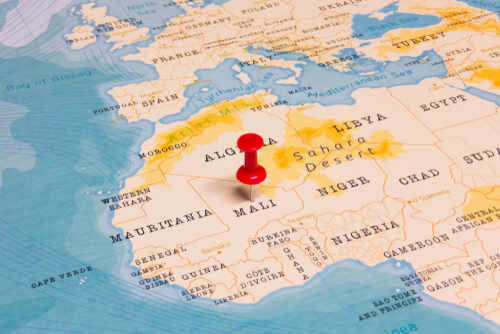
Jama’at Nusrat al-Islam wal-Muslimin has systematically encircled Bamako through economic warfare and military intimidation. The group declared blockades on key western Mali cities in July 2025, targeting fuel corridors from Senegal and Côte d’Ivoire. By November 2025, JNIM extended the stranglehold to eastern routes from Niger, crippling 95% of petroleum imports essential to Mali’s government operations and civilian infrastructure. The blockade has destroyed over 300 tankers, isolating military forces and draining economic resources critical to the junta’s survival. This calculated strategy demonstrates JNIM’s evolution from guerrilla raids to quasi-governmental control over territory and commerce.
Direct Threat to American Security Confirmed
General Michael Langley, commander of U.S. Africa Command, warned in congressional testimony that Sahel-based jihadist groups now possess the capability to strike the U.S. homeland. This assessment marks a significant escalation from viewing JNIM as a regional threat to recognizing it as a transnational danger with global reach. The group’s al-Qaeda affiliation provides access to broader coordination networks, smuggling routes, and operational expertise that distinguish it from the more locally-focused ISIS-Sahel. JNIM’s links to Nigerian terror networks including Ansaru and Boko Haram create corridors for potential attacks beyond Africa. The withdrawal of U.S. forces from Niger in 2024 eliminated critical intelligence-gathering positions precisely when monitoring became most urgent.
Western Withdrawal Creates Jihadist Expansion Opportunity
France’s Operation Serval temporarily pushed jihadists from northern Mali in 2013, but recent Western evacuations reversed those gains. The U.S. departure from Niger and French withdrawals across the Sahel in 2024 created power vacuums that JNIM exploited with ruthless efficiency. The group formed in 2017 by consolidating multiple al-Qaeda-linked organizations, enhancing coordination and lethality year over year. Violent events along the Benin-Niger-Nigeria border corridor increased 86% between 2024 and 2025, with fatalities jumping 260%. JNIM has pushed operations into Benin, Togo, and Côte d’Ivoire, establishing frontlines toward the Gulf of Guinea coast where economic targets and Western interests concentrate.
April 2026 Assault Brings Terror to Capital Region
JNIM and Tuareg separatists from the Azawad Liberation Front launched coordinated strikes on April 25, 2026, targeting multiple sites near Bamako. Attackers damaged the defense minister’s residence and struck the Kati military base, demonstrating capability to penetrate Mali’s most heavily defended areas. The joint operation reveals unlikely alliances forming against the military junta that seized power in 2020 coups. Mali’s government, supported by Russian Wagner mercenaries, has proven ineffective against JNIM’s blend of economic blockades and precision attacks. The junta’s fuel import restrictions inadvertently strengthened JNIM’s smuggling operations, providing revenue that funds territorial expansion and weapons acquisition throughout the region.
Government Failures Enable Proto-State Formation
The collapse of effective governance in Mali stems from years of policy missteps by both local and international actors. The 2011 overthrow of Libya’s Gaddafi flooded the Sahel with weapons and displaced fighters, igniting Mali’s 2012 Azawad rebellion when Tuareg rebels allied with al-Qaeda in the Islamic Maghreb. Ethnic tensions, porous borders, and junta corruption created conditions ripe for jihadist exploitation. JNIM now operates a proto-state in rural Mali, collecting taxes, administering Sharia law, and controlling gold and livestock smuggling worth millions. The group’s attacks occur within nine miles of key roadways 90% of the time, strangling commerce and government authority. This represents precisely the kind of ungoverned space that enabled the original al-Qaeda to plan September 11th—but Washington appears distracted by other priorities.
Jihadist Network Identified as U.S. Homeland Threat Expands Control in Malihttps://t.co/MsTFaIuW3n
— Paul (@pjones461) April 30, 2026
Americans should question why military and intelligence officials identified this growing threat yet withdrew forces at the critical moment. The pattern mirrors Afghanistan, where stated counterterrorism goals collapsed under bureaucratic inertia and shifting political winds. JNIM’s expansion validates concerns that government elites prioritize optics over genuine security, leaving vulnerable populations—both African and American—exposed to consequences of failed policy. The Sahel’s descent into jihadist control demonstrates what happens when Washington loses focus, and ordinary citizens worldwide pay the price for decisions made in distant capitals by officials insulated from the chaos they enable.
Sources:
Congressional Hearing on Threats in Africa – U.S. Government Publishing Office
The US Needs to Face the Rising Threat of Jihad in the Sahel Region – Fair Observer
JNIM’s Expansion in the Sahel and Coastal West Africa – Homeland Security Today
Salafi-Jihadi Areas of Operation in West Africa – Critical Threats Project
Violent Extremism in the Sahel – Council on Foreign Relations