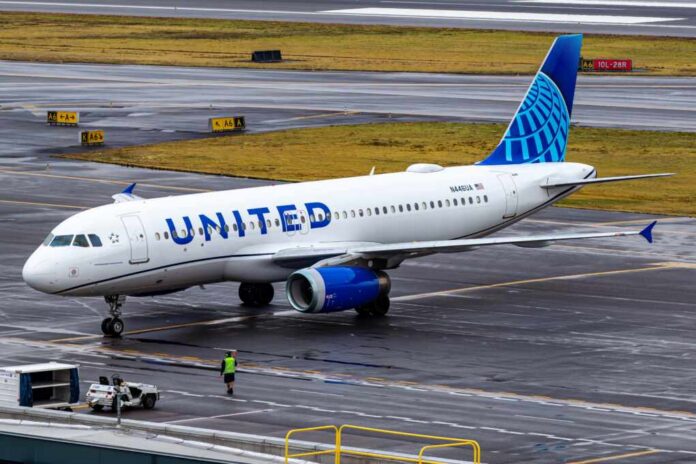
Passengers on United Flight 661 learned the hard way that when Washington backs off enforcement, a “weather delay” can turn into seven hours of airplane purgatory with almost no accountability.
Story Snapshot
- United Flight 661 sat on the Newark tarmac about seven hours during severe storms, then was canceled.
- Thunderstorms and ground stops were real—but do not fully explain why passengers were kept onboard so long.
- Federal tarmac delay rules say domestic passengers must get a chance to deplane by three hours, with limited exceptions.
- The Department of Transportation under Secretary Sean Duffy has issued zero tarmac-delay fines in Trump’s second term, weakening deterrence.
Seven Hours Stuck On The Ground
United Flight 661 from Newark to Chicago boarded in the early evening and pushed back from the gate with storms in the forecast. Passengers describe sitting on a taxiway or inactive runway for roughly seven hours as a severe thunderstorm system stalled departures across the New York region. The aircraft never took off. The flight was ultimately canceled and returned to a gate around 12:45 a.m., long after most travelers expected to be in the air or at their destination. For many, this felt less like routine weather trouble and more like being trapped.
Social media posts from passengers and observers confirm a line of strong thunderstorms, ground stops, and heavy congestion at Newark Liberty International Airport that night. A severe thunderstorm watch and later a warning covered much of New Jersey, and air traffic control announced delays in advance in anticipation of the weather. United and local television coverage both pointed to storms and lightning as the official reason operations slowed and departures stalled. Weather was clearly a factor—but it is only part of the story that matters to passengers.
What The Law Requires When Planes Sit
Federal tarmac delay rules, adopted after past horror stories, set clear limits on how long airlines can keep people on a parked plane. For domestic flights, carriers must give passengers a chance to deplane once a tarmac delay hits three hours, unless safety, security, or specific air traffic control instructions make returning to a gate unreasonable. Airlines must also provide food and drinking water by two hours, keep toilets working, maintain a comfortable cabin temperature, and update passengers every 30 minutes during long delays. United’s own public contingency plan echoes these obligations and states passengers “shall have the option to deplane” in excessive delays. On Flight 661, none of that lined up with the seven-hour reality described by travelers.
Accounts from Newark raise sharp questions about whether these legal protections were honored in practice. Reports indicate that Flight 661 requested to return to a gate once it became clear departure was not happening “in the foreseeable future,” but the process “took longer than expected because of ongoing ground congestion,” according to a United spokesperson. That explanation leans heavily on weather and traffic, yet does not spell out why passengers could not be brought off the aircraft by three hours using a gate or remote stairs, as the rules allow when safe. Consumer advocates note that weather alone does not automatically excuse a carrier from its duty to give passengers an option to get off.
From Record Fines To Zero Consequences
Under prior administrations, the Department of Transportation treated long tarmac delays as a serious breach and backed that up with record fines. In 2021, United Airlines paid about $1.9 million for 25 incidents where passengers were kept on grounded planes too long, and American Airlines faced $4.1 million in penalties for repeated violations. The Department described these as the largest tarmac-delay fines ever and framed them as deterrents meant to protect travelers from being confined for hours without choice. Those enforcement actions sent a clear message: follow the rules or pay up.
That posture has changed sharply in the current term. Since Donald Trump’s second presidency began, Transportation Secretary Sean Duffy has issued zero fines for extended tarmac delays. The lack of penalties coincides with fresh stories of United passengers stuck on Newark taxiways for seven, eight, or more hours during storms. Critics argue that when Washington stops enforcing its own consumer rules, airlines face less pressure to make hard choices—like canceling earlier, towing to a gate, or deploying stairs—to respect passenger rights. Weather becomes the easy public explanation, while regulators quietly stand down.
Weather, Climate Narratives, And Passenger Rights
United and many media reports highlight severe storms and lightning as the driver of Flight 661’s ordeal. Broader studies do show that weather now causes most air traffic delays and that climate trends are increasing extreme events. However, nothing in the public record directly links this specific Newark thunderstorm to long-term climate patterns or proves that “unpredictable” climate change made seven hours on the tarmac unavoidable. Air traffic control had warned of delays in advance, which suggests the storm’s impact was expected, not a surprise.
For travelers, the key issue is simpler than climate politics: when you are trapped on a plane for hours, who is looking out for you? Federal rules clearly say airlines must offer a way off the aircraft by three hours in most domestic cases. Past fines show those rules can bite when enforced. Today, with zero penalties issued for long tarmac delays under the current Transportation Secretary, passengers on flights like United 661 are discovering that “protections” on paper do not mean much if government watchdogs choose not to use their teeth. Conservative readers who value limited but firm government can reasonably ask why a basic duty—to uphold existing law and defend citizens’ rights—seems to have slipped into airplane purgatory too.
Sources:
theatlantic.com, flightaware.com, reddit.com, virtual-aviation-accidents.fandom.com, flightradar24.com, youtube.com, foxbusiness.com, iam141.org, cbsnews.com, facebook.com