
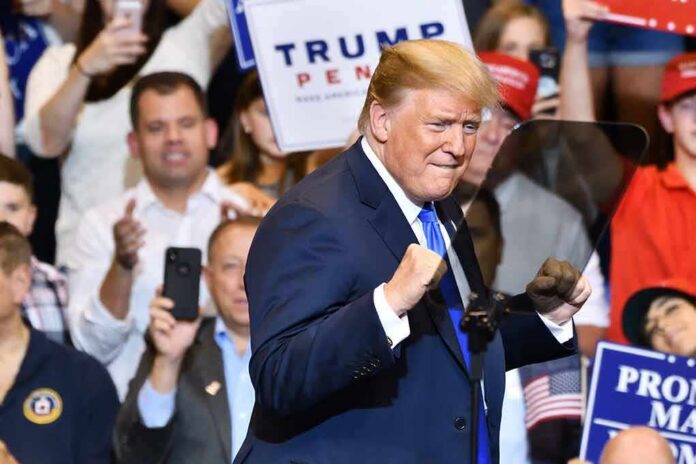
Across Europe, Trump-style nationalism is shaking the political map, and despite elite panic the movement is still spreading and evolving.
Story Snapshot
- European nationalist parties are openly borrowing President Trump’s rhetoric, slogans, and hard line on immigration.
- Scholars say Trumpism helped normalize ideas that Brussels once smeared as “far-right” and “fringe.”
- Corporate media now worries that Trump is driving a broader “global surge to the right” inside the European Union.
- Even where leaders distance themselves from Trump personally, they keep pushing Trump-style policies at home.
Trumpism Gives Europe’s Nationalists a Playbook and a Backbone
Across the continent, European leaders who oppose open borders and globalism are copying President Trump’s style, language, and priorities. One study of parties in Germany, Italy, and Hungary found they “emulated Trump’s rhetoric and practices” soon after his 2016 win, especially on security, immigration, foreign policy, and corruption. Researchers say these parties used Trumpism to normalize ideas Brussels once called extreme, and to justify tougher border enforcement and national-first policies in their own countries.
Think tanks tracking this trend point to copycat slogans like “Poland First,” “Make Romania Great Again,” and “Make Albania Great,” all clearly modeled on “America First” and “Make America Great Again.” Harvard reporting described Trump’s first election as a “political windfall” for Europe’s right, calling his win an “inspirational template” for nationalist candidates. Politicians study which of his messages hit hardest with voters, then test similar lines at home on immigration, crime, and cultural issues.
Media Alarm: A “Global Surge to the Right” Inside the European Union
Legacy outlets now admit what many conservatives already sensed: Trumpism is part of a wider nationalist wave, not some isolated American fluke. A major analysis described President Trump as standing “at the forefront of a global surge of hardline conservative populism,” energizing nationalist movements inside the European Union and beyond. These parties are bound together by opposition to mass migration, defense of traditional values against aggressive gender and L.G.B.T. agendas, and pushback on costly climate rules.
European reporters and experts also concede that Trump’s influence has “given populist movements like Germany’s Alternative for Germany, Poland’s Law and Justice, and Portugal’s Chega party a clear boost.” One European Council on Foreign Relations analyst said this influence is “stronger” and “more united” now than just a few years ago. To many everyday Europeans tired of unelected Brussels bureaucrats, high energy costs, and forced multiculturalism, Trump’s success proves that establishment parties can be challenged and beaten at the ballot box.
A Transatlantic Nationalist Network, Even When Leaders Hedge on Trump
President Trump’s second term has also changed how Washington deals with Europe’s right. A Carnegie analysis notes that, unlike past administrations, the current White House has “publicly and repeatedly supported the radical right in European elections,” dealing “a severe shock to the European political mainstream.” That backing helps once-marginal parties present themselves as serious national actors, not fringe protest outfits, even as Europe’s media class fumes about “illiberal” forces gaining clout.
At the same time, the picture is not simple hero worship. Some nationalist leaders worry that Trump’s “America First” focus can clash with their own “Germany First” or “France First” agendas. Reports describe internal splits: Germany’s Alternative for Germany seeks Trump’s moral support to escape isolation, while France’s National Rally keeps him at arm’s length to avoid alienating skeptical voters. Analysts say many parties quietly borrow his communication style and policies while being careful how closely they tie their brand to his name in public.
The Real Story: Old Grievances, New Confidence
Serious research is clear that Europe’s nationalist surge did not start with Trump. These movements grew out of long-running anger over mass immigration, economic inequality, and a remote European Union bureaucracy. But Trump’s victories gave them something they lacked for years: proof that a blunt, anti-woke, anti-globalist message can win national power. One peer‑reviewed article says parties used Trumpism precisely to “normalize” positions they already held, not to invent new ones out of thin air.
For American conservatives, that should sound familiar. European voters are pushing back against the same mix of open borders, climate extremism, bureaucratic overreach, and cultural leftism that hurt families here. Brussels insiders now worry that Trump’s example, and his open outreach to “patriotic European parties,” is helping organize a broader front that questions the European Union’s power itself. Whatever individual leaders think of Trump personally, the issues he forced onto the world stage are not going away—and Europe’s political class knows it.
Sources:
cejsh.icm.edu.pl, nytimes.com, youtube.com, theguardian.com, abcnews.com, brookings.edu, facebook.com, cambridge.org