
U.S. Central Command says American forces struck Iranian boats and missile sites in self-defense amid a fragile ceasefire, raising urgent questions about deterrence, legality, and the safety of our sailors.
Story Highlights
- CENTCOM characterized strikes in southern Iran as narrow self-defense to protect U.S. troops and shipping [4].
- American destroyers reportedly faced missiles, drones, and small boats near key shipping lanes [1].
- Targets allegedly included missile launch sites and boats attempting to lay naval mines [4].
- Debate continues over evidence standards and international law tests for necessity and proportionality [8][10].
What CENTCOM Says Was Hit and Why It Matters
United States Central Command stated that American forces conducted self-defense strikes in southern Iran to protect U.S. troops from threats posed by Iranian forces during an ongoing ceasefire. The announced target set included missile launch sites and Iranian boats allegedly attempting to emplace naval mines—precisely the kinds of systems that endanger warships and commercial tankers transiting vital sea lanes. That defensive framing aligns with longstanding U.S. practice when hostile forces threaten freedom of navigation and the safety of deployed service members [4].
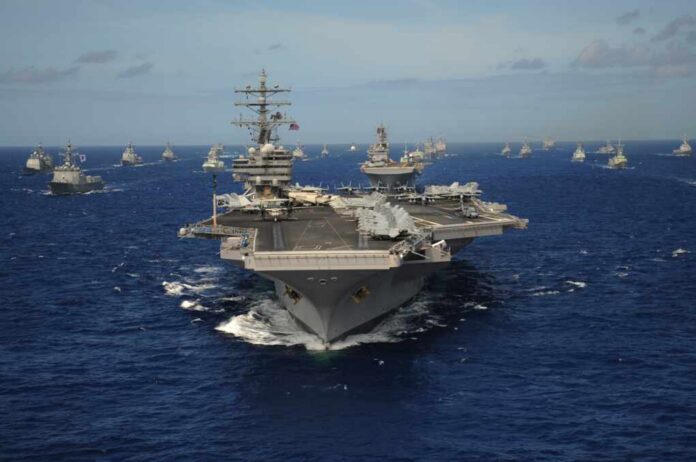
Reports indicated American destroyers, including USS Truxton, USS Mason, and USS Rafael Peralta, were attacked by missiles, drones, and small boats near critical chokepoints, sharpening the imperative to neutralize imminent threats before they can close distance or saturate defenses. In contested waters, seconds matter, and mine warfare or missile salvos can shut lanes and spike energy prices swiftly. Protecting crews and commerce remains a core mission of U.S. naval presence and the legal backbone for limited force in self-defense [1].
Ceasefire Tensions, Evidence Questions, and the Law of Self-Defense
Broadcasts repeated CENTCOM’s claim that Iranian boats were attempting to lay mines, but public releases at publication time did not include sensor imagery or declassified intelligence confirming mine emplacement. That evidentiary gap fuels adversarial narratives alleging unlawful escalation. Under international law, self-defense analysis typically turns on whether there was an armed attack, and whether the response was necessary and proportionate. Prior maritime episodes show governments often declassify corroboration later, not immediately during operations [4][10].
Legal commentary on analogous Red Sea and Gulf incidents explains how repeated or imminent attacks on warships can justify limited strikes to suppress launchers, drones, and maritime threats to shipping lanes. Scholars have emphasized the necessity and proportionality tests, noting that tailored strikes against capabilities actively enabling attacks usually fit within accepted self-defense parameters. That framework helps readers parse claims in real time, even when full strike logs or battle damage assessments are not yet public [8][10].
Strategic Stakes: Deterrence, Energy Security, and American Credibility
Shipping corridors near the Strait of Hormuz carry a significant share of the world’s oil, and disruptions—even brief—can send prices higher for families already burdened by years of inflation and elevated energy costs. When U.S. destroyers come under fire, the risk calculus changes for every tanker captain and insurer. Swift, targeted reprisals signal that attempts to close the strait through missiles, drones, or mines will fail. That signal protects American sailors and helps keep fuel flowing to Main Street, not just trading houses [1][4].
🇺🇸 U. S. strikes in southern Iran destroy boats, air defense system near Bandar Abbas, as Iran warns oil prices could hit $200pic.twitter.com/bHxVyo3iC8
— U.S.A.I. 🇺🇸 (@researchUSAI) May 26, 2026
The broader 2026 context includes a U.S. naval blockade posture and repeated confrontations that test resolve without inviting a wider war. Washington’s messaging stresses narrow military objectives rather than open-ended conflict. For conservative readers, the core measure is constitutional duty: safeguard American lives, uphold freedom of navigation, and avoid mission creep. Limiting strikes to launch sites and mine-laying craft reflects that restraint while confronting real, proximate threats to our ships and the global energy lifeline [5][4].
How to Read Breaking Claims Without the Spin
Early reporting in fast-moving maritime clashes often arrives before governments release imagery, intercepts, or debris analysis. That timing gives critics room to charge “escalation” and supporters room to declare “deterrence,” sometimes on thin public records. A practical filter is to ask three questions grounded in law and common sense: Were U.S. forces or ships under attack or imminent threat; were the targets directly tied to that threat; and was the response limited to removing that danger. Recent legal analyses apply that exact lens to similar cases [8][10].
For now, the U.S. position is straightforward: American destroyers faced hostile fire, and U.S. forces struck only what threatened them—missile launch sites and mine-laying boats. If additional evidence is released, it should show necessity and proportionality. If Iran contests the facts, it will likely argue ceasefire breach and insufficient proof. Until declassifications arrive, Americans can still insist on two principles: protect our sailors immediately, and keep the operation tightly focused to avoid unnecessary escalation [1][4][10].
Sources:
[1] Web – U.S. strikes 2 Iranian ports as American warships come under fire
[4] YouTube – U.S. strikes Iran in ‘self-defense,’ officials say
[8] Web – Attacks on U.S. Warships Justify Self-Defense Against Houthi Forces …
[10] Web – The Law of Self-Defense and the U.S. and UK Strikes against the …