A 77-year-old retired pastor faces criminal prosecution in Northern Ireland for preaching a Bible verse on a public street—never mentioning abortion—in what religious liberty advocates warn is an alarming expansion of government power to silence faith-based speech.
Story Snapshot
- Clive Johnston charged under UK abortion buffer zone law for preaching John 3:16 across from hospital, despite no abortion reference in sermon
- Prosecution argues any speech in 100-meter “safe access zone” that might “influence” constitutes criminal offense, even neutral religious expression
- Trial concluded April 23, 2026, with judgment reserved; US State Department monitoring case for free speech violations
- Case marks first known prosecution of non-abortion religious speech under 2023 Northern Ireland law, setting precedent for restricting evangelism near medical facilities
Pastor Charged for Gospel Message Without Abortion Reference
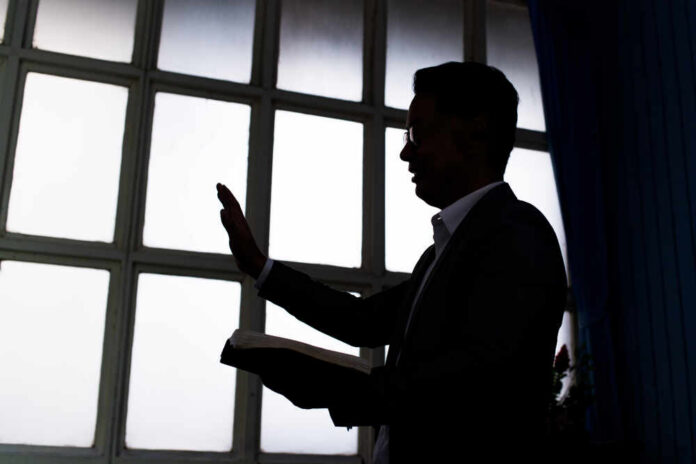
Clive Johnston, a retired pastor and former president of the Association of Baptist Churches in Ireland, stood trial in April 2026 for preaching on July 7, 2024, on a public sidewalk across from Causeway Hospital in Coleraine, Northern Ireland. Johnston’s open-air sermon focused on John 3:16—”For God so loved the world”—accompanied by ukulele music and his personal testimony. No placards, banners, or verbal references to abortion appeared in the 20-minute message. Police directed him to leave the area under the Abortion Services (Safe Access Zones) Act (Northern Ireland) 2023, which established 100-meter buffer zones around eight abortion providers. Prosecutors charged him with attempting to “influence” individuals seeking abortions and failing to comply with police orders, carrying potential fines up to £2,500 and a criminal record.
Buffer Zone Law Expands Beyond Anti-Abortion Protests
Northern Ireland enacted the Safe Access Zones Act in 2023 following England and Scotland’s similar measures, prohibiting conduct within 100 meters of abortion facilities that could “influence,” “harass,” or “impede” access. The law emerged after Northern Ireland legalized abortion in 2019 through Westminster intervention, ending decades of near-total bans. Johnston’s case represents the first prosecution targeting religious expression unrelated to abortion under this statute. Prosecutors argued any act within the zone causing potential “distress” or dissuasion qualifies as an offense, regardless of content. This interpretation diverges from the law’s stated intent to prevent direct harassment of patients, raising concerns among civil libertarians that neutral speech—prayer, evangelism, or even casual conversation—now risks criminalization near hospitals providing abortion services.
Religious Liberty Groups Challenge Vague “Influence” Standard
Simon Calvert, Deputy Director of the Christian Institute, which funded Johnston’s defense, questioned whether laws designed to stop abortion protests should criminalize gospel preaching that says nothing about abortion. Calvert called the prosecution a “shocking new attempt to restrict freedom of religion and freedom of speech.” The case echoes prior UK incidents where individuals faced arrest for silent prayer near clinics, including Isabel Vaughan-Spruce (acquitted) and Adam Smith-Connor (convicted in 2024). Johnston, a grandfather of seven with no criminal record, maintained his sermon was a standard evangelical practice common in Northern Ireland’s religiously observant communities. The judge reserved judgment until May 7, 2026, leaving the outcome pending as international observers, including the US State Department, monitor the case for human rights implications.
Precedent Threatens Public Evangelism Near Medical Facilities
A conviction would establish that governments may criminalize religiously motivated speech based solely on proximity to abortion providers, even absent harassment or obstruction. Legal analysts warn this precedent could extend buffer zone enforcement to any hospital or clinic offering abortion, effectively banning evangelism, prayer vigils, or faith-based counseling in vast swaths of public space. The broad “influence” standard—requiring no proof of intent or disruption—empowers authorities to interpret neutral religious expression as criminal protest. For evangelicals who view open-air preaching as a biblical mandate, the ruling risks chilling constitutionally protected activity. Pro-choice advocates counter that buffer zones protect vulnerable patients from intimidation, but critics argue laws written to prevent aggressive confrontation are being weaponized against peaceful, content-neutral speech that happens to occur near facilities.
Retired pastor convicted for preaching near hospital that commits abortions – LifeSite https://t.co/TMVoMJ43BZ
— Maureen Jo Begley (@maureen_jo) May 8, 2026
The case underscores growing tensions between reproductive access laws and traditional liberties of speech and religion, forcing courts to balance competing rights in ways that may redefine permissible public discourse. Johnston’s prosecution illustrates a broader pattern where well-intentioned protections morph into tools for suppressing dissent or unpopular viewpoints, a concern resonating across ideological lines among those wary of government overreach. Whether the magistrate’s May ruling upholds Johnston’s right to preach or affirms the state’s authority to police speech based on location will signal how far Western democracies will go in prioritizing one set of rights over another, with implications extending far beyond Northern Ireland’s borders.
Sources:
Retired pastor faces trial under U.K. speech laws for preaching John 3:16 near hospital – Reason.com
US State Department monitors UK pastor’s trial over hospital sermon – Fox News