
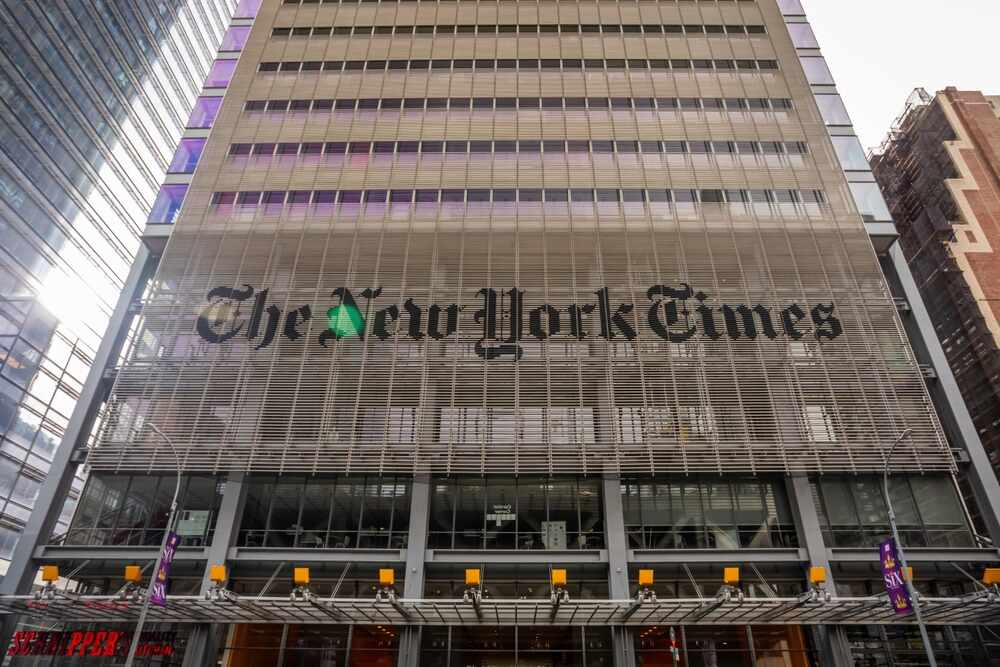
Federal enforcement against diversity hiring just reached the New York Times, signaling an aggressive shift in how the government interprets civil rights law and threatening to reshape employment practices across American institutions.
At a Glance
- The EEOC sued the New York Times on May 5, 2026, alleging the organization discriminated against a white male editor by passing him over for promotion to meet diversity goals
- The specific case involves a 2025 Deputy Real Estate Editor position filled by an external candidate with less relevant experience than the internal applicant
- EEOC leadership argues that published diversity commitments constitute evidence of unlawful race and sex-conscious hiring decisions violating Title VII
- The lawsuit signals a dramatic shift in federal enforcement priorities under current EEOC leadership, with implications for how major employers nationwide implement diversity initiatives
Federal Agency Takes Aim at Diversity Goals
The Equal Employment Opportunity Commission filed a federal lawsuit against The New York Times Company on May 5, 2026, accusing the prestigious news organization of violating the Civil Rights Act of 1964 by considering race and gender in a hiring decision. The EEOC alleges the Times passed over a qualified white male editor for a deputy real estate editor position in early 2025, instead hiring an external female candidate with limited experience in real estate journalism. The case centers on whether organizational diversity goals constitute illegal discrimination under Title VII.
The Specific Hiring Decision Under Scrutiny
According to the EEOC complaint, a longtime New York Times editor with extensive real estate journalism experience was not advanced to the final interview stage for the deputy position. The organization ultimately hired an outside candidate described as multiracial and female, despite her lacking the required real estate journalism background. The EEOC argues this decision violated federal law by prioritizing demographic characteristics over qualifications. The Times maintains the hired candidate was the most qualified and that neither race nor gender influenced the decision, characterizing the EEOC’s allegations as based on a predetermined narrative rather than facts.
Published Diversity Commitments as Evidence of Intent
The EEOC’s enforcement approach marks a significant departure from prior practice by citing the Times’ own published diversity goals as evidence of discriminatory intent. The Times had publicly committed to increasing Black and Latino leadership by 50 percent by 2025, achieving that goal ahead of schedule in 2022. Rather than viewing diversity initiatives as lawful organizational objectives, the EEOC under current leadership interprets such published commitments as proof that hiring decisions are motivated by race and sex rather than merit. EEOC Chair Andrea Lucas stated: “Federal law is clear: making hiring or promotion decisions motivated in whole or in part by race or sex violates federal law. There is no diversity exception to this rule.”
Broader Implications for Corporate America
The lawsuit against one of America’s most prestigious institutions sends a powerful signal to other employers implementing diversity programs. Major corporations have already begun scaling back DEI initiatives in response to litigation threats from conservative legal groups, with companies like JPMorgan Chase modifying their diversity policies after receiving shareholder letters characterizing such programs as illegal discrimination. The Times case, involving a federal enforcement agency rather than private litigation, elevates the stakes significantly. Organizations now face uncertainty about whether diversity-conscious hiring practices remain legally permissible, potentially creating a chilling effect on diversity investments across American business and media.
Questions About Merit and Qualification Assessment
The case raises fundamental questions about how organizations assess candidate qualifications and what role diversity can legitimately play in hiring decisions. The EEOC argues the internal candidate was more qualified because he possessed specific real estate journalism experience. The Times contends that qualifications extend beyond narrow job-specific experience to include potential, cultural fit, and other factors that justified selecting the external candidate. Employment law experts note the EEOC must prove the diversity goals actually motivated the specific decision, not merely that they existed. The outcome will likely influence how courts interpret the relationship between organizational goals and individual hiring decisions going forward.
New York Times sued by US employment agency over diversity, hiring https://t.co/SQXFsOryIT
— Reuters Legal (@ReutersLegal) May 5, 2026
Federal Enforcement Shift Reflects Ideological Change
The EEOC action reflects broader ideological shifts in federal enforcement priorities under current leadership. The agency, which traditionally focused on protecting historically disadvantaged groups from discrimination, now prioritizes what it characterizes as “reverse discrimination” claims. This represents a marked departure from previous EEOC interpretations that generally permitted diversity considerations in hiring. The shift accelerated following the Supreme Court’s 2023 decision restricting affirmative action in college admissions, which created legal uncertainty about diversity-conscious employment practices. Conservative legal groups have seized on this uncertainty to challenge corporate DEI programs through litigation, using civil rights laws originally designed to expand opportunity for people of color.
Sources:
EEOC Sues New York Times Over Discrimination Allegations
U.S. Rights Agency Sues New York Times for Allegedly Discriminating
EEOC Sues New York Times for DEI-Related Race and Sex Discrimination
Federal Discrimination Watchdog Sues New York Times
The New York Times’s Response to the EEOC’s Lawsuit Alleging Employment Bias