Federal immigration authorities have put a Cuban military family member in custody, and the case exposes how far the Trump administration is willing to go against Havana’s power network.
Quick Take
- Immigration and Customs Enforcement said Adys Lastres Morera was arrested in Miami and is now facing removal proceedings.
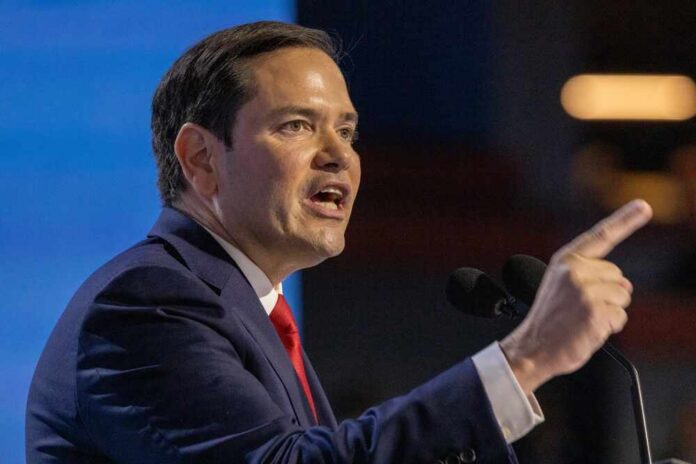
- Secretary of State Marco Rubio said he revoked her lawful permanent resident status because she was allegedly helping Cuba’s communist regime.
- Reporting says she is the sister of Ania Guillermina Lastres Morera, the executive president of the Cuban military conglomerate GAESA.
- Public records reporting says she was tied to at least two Florida companies in the real-estate sphere.
What the Government Says Happened
Immigration and Customs Enforcement said Adys Lastres Morera entered the United States as a lawful permanent resident in 2023 and is now in custody pending removal proceedings [2]. Miami reporting said the arrest happened in Miami, and other outlets repeated the same sequence of detention, green-card revocation, and deportation exposure [1][3]. That matters because the case is not being handled like a criminal prosecution; it is being pushed through immigration power.
Rubio publicly said he revoked Lastres Morera’s status because she was “managing real estate assets and living in Florida, while also aiding Havana’s communist regime” [2]. Reporting also says authorities relied on section 237 of the Immigration and Nationality Act, a provision tied to foreign-policy consequences [2]. For conservatives who want immigration law enforced without apology, the move fits a hard line. But the public record still shows an administrative action, not a criminal charge.
Why GAESA Matters
GAESA is the military-linked conglomerate that controls a large share of Cuba’s economy, which is why any family tie to its leadership draws immediate attention [2]. Reporting says Lastres Morera is the sister of Ania Guillermina Lastres Morera, identified as the group’s executive president [1][2]. That relationship, if accurate, gives the government a plausible reason to scrutinize whether a U.S. green-card holder had deeper ties to the Cuban state than ordinary family association.
At the same time, the available reporting does not prove the government’s sharper allegation. Rubio’s claim that she was “aiding Havana’s communist regime” is public, but the provided articles do not show bank records, contracts, witness statements, or other hard evidence of direct support [1][2][3]. That gap should matter to anyone who cares about due process. A strong border and strong national security still depend on facts that can survive scrutiny.
Florida Business Links Raise Questions
The Miami Herald said a review of public records showed Lastres Morera was the registered agent or manager for at least two Florida-based companies [1]. Reporting also says she had a Clearwater address and was linked to business activity in the Kendall area [1]. On its face, that is not proof of wrongdoing. Plenty of lawful residents do business in Florida. But it does explain why federal officials may have viewed her as more than a passive family member living quietly in the state.
Miami arrest targets sister of GAESA leader, Cuba's top military business group: Before federal agents moved in this week, Secretary of State Marco Rubio had already stripped Adys Lastres Morera of her green card https://t.co/jQnnouQXFE
— Quartz (@qz) May 22, 2026
What remains missing is the paperwork that would settle the dispute. The reports do not include the actual revocation order, the immigration charging documents, or any public memo spelling out the legal basis in detail [2]. They also do not include primary proof of the family relationship or evidence showing a money trail back to Cuban officials [1][2]. Until those records are released, the case will sit between government assertion and public skepticism.
What Readers Should Watch Next
The next question is whether this becomes a clean immigration-enforcement case or another example of government power used through broad foreign-policy authority [2]. If the administration has solid evidence, it should be made public as much as the law allows. If it does not, then Americans have every reason to worry about opaque federal action replacing transparent justice. Either way, the story reflects a larger truth: immigration law can be used aggressively when Washington wants a message sent.
Sources:
[1] Web – Trump admin detains sister of top GAESA official in Miami
[2] Web – Sister of Cuban military conglomerate chief arrested in Florida …