
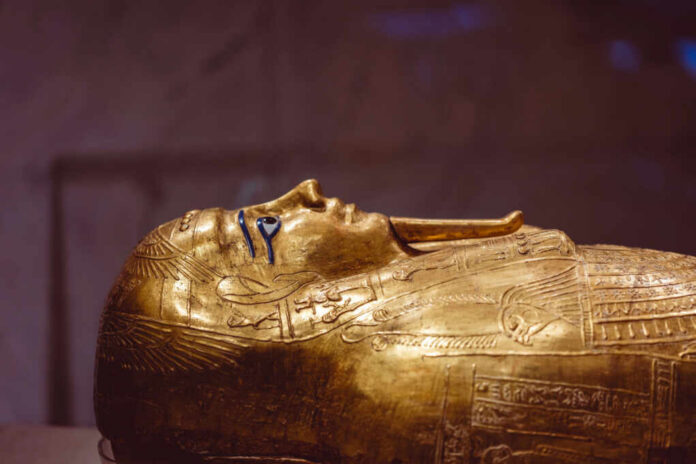
New research shows ancient Egyptian princesses were not just buried with weapons—they trained hard and knew how to use them.
Story Snapshot
- Bioarchaeologists studied five royal women from 4,000 years ago and found bones shaped by heavy weapon use.
- Strong muscle marks and healed injuries match repeated archery, dagger work, and mace handling, not dainty palace lives.
- The findings challenge decades of academic claims that weapons in women’s tombs were “just symbolic” ritual objects.
- Evidence adds to a growing record that elite women in Egypt sometimes trained for hunting and even military-style activity.
Princesses with Weapons, and the Bones to Prove It
A new study in the journal Frontiers in Environmental Archaeology looked at the mummified remains of five royal women from Egypt’s Middle Kingdom, about 4,000 years ago. These women, including Princess Ita and Princess Noub-Hotep, were buried with daggers, bows, arrows, and maces. Researchers found unusually strong muscle attachment marks on their arm and hand bones. Those marks line up with the repeated pull of bowstrings and steady grip needed to control real weapons.
Lead researcher Dr. Zeinab Hashesh of Beni-Suef University explained that these bone changes only appear after long-term heavy use of muscles. The team saw pronounced development in the upper limbs, especially in areas tied to precision gripping and pulling motions. That pattern fits regular archery practice and handling of maces or daggers, not occasional ceremonial use. Hashesh said this “directly explains” why bows, arrows, and maces appear in these women’s tombs: they were tools the princesses actively used during life, not mere symbols.
From “Token Gifts” to Trained Female Fighters
For years, many Egyptologists claimed that weapons in women’s burials were “token” afterlife items or ritual signals of the god Osiris, not signs of real combat training. Some argued these grave goods were about religion and royal status, and had nothing to do with how women lived day to day. Hashesh’s study pushes back hard on that view. She points out that the princesses’ bones show the same kind of wear you see in people who repeatedly use weapons, making the “purely symbolic” explanation much harder to defend.
Media reports highlight that the excavated weapons are functional types—daggers, bows, and maces—rather than flimsy decorations. Science News notes that these finds include “daggers, bows and other weapons” in the tombs of Amenemhat II’s daughters. When researchers match those objects to the muscle changes in the bones, it tells a clear story: these royal women trained in physically demanding skills like archery and hunting. That picture fits broader work showing women in ancient Egypt could wield weapons and adopt military styles when power or danger called for it.
Active Lives, Real Injuries, and What Counts as “Warrior”
The study also found signs of injuries the women suffered during life. These injuries had healed, which means the princesses lived with the strain and impact that came with their active routines. Hashesh links these wounds to accidents, hard blows, and falls tied to hunting, military training, or other demanding activity. That is very different from the soft image of royal women sitting safely inside palaces. Their bodies show they pushed themselves, took risks, and sometimes got hurt.
At the same time, the researchers are careful about what they claim. The bones and weapons prove training and regular use, but they do not prove these women led armies in huge battles. Similar studies on “warrior women” in other cultures warn that heavy weapon training can come from guarding, hunting, or small-scale fighting, not just full war. In Egypt, scholars now say women were usually outside the formal army, but could take on militaristic roles or styles in special cases, especially around royal power struggles.
Rewriting Old Gender Myths—and Why It Matters Today
These princesses’ stories hit a nerve because they expose how some in the academic world still cling to rigid gender ideas. For decades, textbooks said ancient Egyptian women cooked, sewed, and stayed in the home while men fought and ruled. New finds keep proving that picture is too simple. Women could own property, run parts of government, and even be tied to warfare and security when needed. The “warrior princesses” study forces experts to face that evidence instead of waving it away as ritual or myth.
Ancient Egyptian princesses born 4,000 years ago were skilled archers, new study shows
Creo que interesará a @PGonz8 y @maatkarestela
Pongo link al estudio original en comentario.https://t.co/30Atu0jT53— Julio Arrieta Sanz (@ArrietaSanz) July 17, 2026
For today’s conservative readers, there is a deeper lesson here. Real history shows that strong societies respect reality over ideology. Ancient Egypt trained some elite women to use weapons because survival, security, and hunting demanded skill—not because of fashion or political spin. Our own debates about defense, firearms, and who should be trusted with force should rest on facts and ability, not on academic narratives that ignore hard evidence when it does not fit their theories.
Sources:
sciencenews.org, frontiersin.org, sciencealert.com, judithweingarten.blogspot.com, the-past.com, biblicalarchaeology.org, worldhistory.org