
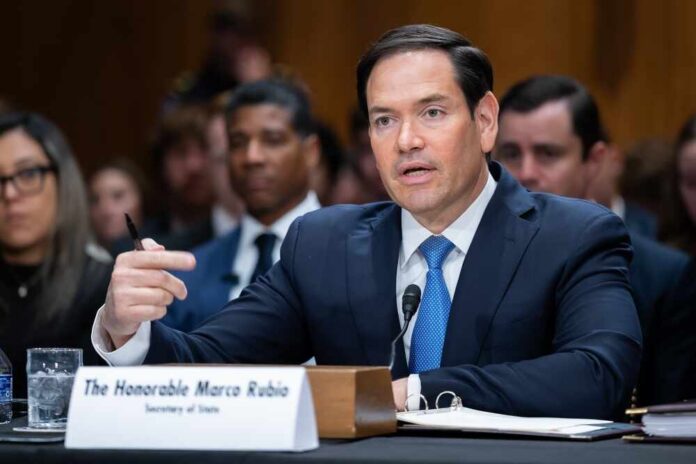
Secretary of State Marco Rubio is heading to the heart of the Middle East this week to sell Gulf allies on a fragile Iran deal — and some of those allies are already unhappy they weren’t told about U.S. strikes on Iran in the first place.
Story Snapshot
- Rubio will visit the United Arab Emirates, Kuwait, and Bahrain from June 23–25 to discuss the emerging U.S.-Iran agreement and Strait of Hormuz security.
- He is expected to hold a ministerial summit with Gulf Cooperation Council foreign ministers in Bahrain.
- Some Gulf allies privately complained the U.S. did not warn them before striking Iran, raising real questions about trust.
- Analysts warn any Iran deal that leaves out Gulf security concerns could backfire badly for the whole region.
Rubio Heads to the Gulf as Iran Talks Hang in the Balance
Secretary of State Marco Rubio is set to visit the United Arab Emirates, Kuwait, and Bahrain this week, according to sources familiar with the plans. [3] The trip comes as the Trump administration pushes to finalize a diplomatic framework with Iran. Rubio has said the Strait of Hormuz “must be accessible” and that talks were actively moving forward. [2] The visit signals Washington wants its Gulf partners locked in before any deal is signed.
In Bahrain, Rubio is expected to convene a meeting with foreign ministers from the Gulf Cooperation Council — a group of six Arab nations that includes Saudi Arabia, Qatar, and the three countries on his itinerary. [3] That summit matters. The Gulf states sit directly in Iran’s shadow, and their support — or lack of it — shapes whether any deal actually holds. Rubio has made ten official overseas trips in his first six months as Secretary of State, visiting more than twenty countries. [9] This one may be the most consequential.
Gulf Allies Are Frustrated — and Washington Knows It
The reassurance mission comes with baggage. Some Gulf allies privately complained that the United States did not notify them before launching strikes on Iranian targets. [19] That’s a serious breach of trust among partners who live next door to Iran. The Center for Strategic and International Studies notes that Gulf states are likely to greet any Iran deal with “a mix of relief and trepidation,” and that a huge trust deficit remains. [25] A single diplomatic visit won’t erase that overnight.
Some Gulf leaders have also privately pushed the Trump administration to keep military pressure on Iran until its behavior changes for good — not just on paper. [14] That puts Rubio in a tough spot. He needs to show Gulf partners that the deal protects them, while also convincing Iran to sign. The Atlantic Council warns that any deal without Gulf security provisions risks blowing up both regional stability and U.S. relationships in the area. [24] Rubio has to thread a very narrow needle.
What the Deal Must Include — and What’s Still Missing
The framework being discussed between Washington and Tehran does not yet appear to include specific protections for Gulf security, reparations for past Iranian attacks, or a clear way to verify Iran keeps its word. [24] Iran, for its part, has demanded U.S. force withdrawals and compensation payments — demands Washington has flatly rejected. Rubio said after recent talks in Qatar that a deal could come “in a few days,” but Iran has not yet accepted Washington’s terms. [4][6]
Rubio to visit Gulf capitals to discuss Iran deal, Hormuz security
——
US Secretary of State Marco Rubio is set to visit the UAE, Kuwait, and Bahrain on 23–25 June to discuss the recently signed US–Iran memorandum of understanding and efforts to guarantee unrestricted transit… pic.twitter.com/RbmwRA3Ih2— The Cradle (@TheCradleMedia) June 22, 2026
The United Arab Emirates and Kuwait have publicly welcomed the idea of a U.S.-Iran deal and expressed support for regional stability. [27] But public statements and private confidence are two different things. Gulf states are already exploring new defense deals with European and Asian countries to reduce their dependence on the United States as a security guarantor. [25] That’s a quiet but telling sign of how much work Washington still has to do to keep its Gulf partnerships strong and credible.
Why This Trip Matters for American Interests
The Strait of Hormuz is one of the most important waterways on the planet. Nearly a fifth of the world’s oil passes through it. Iran’s ability to threaten or close that strait directly hits American consumers at the gas pump and rattles global markets. Keeping Gulf allies confident and aligned is not just good foreign policy — it protects American energy security and economic stability at home. A deal that falls apart because Gulf partners weren’t consulted would be a costly failure.
Rubio’s trip is a direct attempt to show that the Trump administration is not cutting backroom deals that leave allies in the dark. Whether Gulf leaders leave those meetings reassured or still skeptical will say a lot about whether this Iran framework has a real future — or whether it’s just a fragile agreement waiting to unravel.
Sources:
[2] YouTube – India US Relations, Quad Meeting & Indo-Pacific Strategy Explained
[3] Web – Rubio speaks on Iran war and America’s next move – Al Jazeera
[4] Web – Rubio plans Middle East trip next week, Axios reports – Reuters
[6] Web – US Secretary of State Marco Rubio is planning a trip to the Middle …
[9] Web – U.S. Secretary of State Marco Rubio said on Saturday, May 23, 2026 …
[14] YouTube – Gulf states maintain unity, but UAE and Bahrain may want to break …
[19] Web – U.S. Secretary of State Marco Rubio is expected to travel … – …
[25] Web – What Gulf states need in a US-Iran deal – Atlantic Council
[27] Web – US Policy in the Middle East: A Report Card