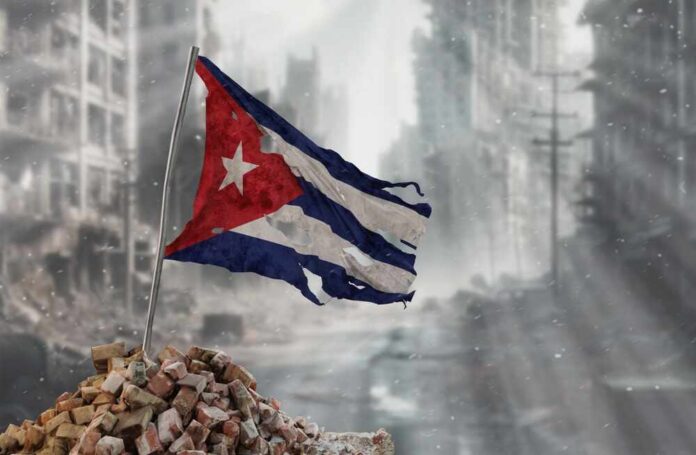
A crumbling socialist grid has once again plunged Cuba into darkness, leaving exhausted families in Havana waiting for hours as power crawls back block by block.
Story Snapshot
- A nationwide grid collapse left about 10 million Cubans without electricity, the latest in a string of failures.
- Power is coming back slowly in Havana, but only part of the capital has lights while many neighborhoods stay dark.
- Cuba’s failing, Soviet-era power plants and decades of regime mismanagement are at the heart of the crisis.
- Daily life has ground to a halt as Cubans endure long blackouts with no clear timeline for full restoration.
How Havana Ended Up in the Dark Again
Reports from Cuba’s own energy ministry say the national grid suffered a “total disconnection,” cutting electricity to nearly the entire island and leaving millions in the dark at once. Officials said the immediate trigger was the sudden shutdown of a major generation unit, which caused a chain reaction across the system and knocked out power nationwide. In simple terms, one big failure brought down everything else, showing how fragile and overloaded the grid has become.
State media described how technicians tried to restart key thermoelectric plants and bring small “microsystems” online around vital services like hospitals and water pumping stations. Local reports said some pockets of Havana and western Cuba began to see power again within hours, but much of the capital stayed dark through the night. Even as lines and plants came back online, officials warned that the country can still only meet about two-thirds of its normal electricity demand.
Slow Restoration Leaves Families Exhausted
As the government slowly reconnects parts of the grid, many Havana residents are still waiting in stifling apartments, with no fans, no refrigeration, and no street lights at night. Earlier blackouts showed the same pattern: a major plant failure, followed by partial restoration in the capital, while large parts of the island go without power for days. During past events, authorities restored only a few hundred megawatts at first, far below the roughly 3,000 megawatts Cuba needs, forcing long, rolling outages to continue.
Independent analysis of Cuba’s energy crisis notes that these blackouts are no accident but the expected result of a grid “stretched to its limits” by age, poor maintenance, and constant fuel shortages. In some periods, Cuba has faced generation shortfalls of 1,300 to 1,700 megawatts at peak hours, leaving nearly half of national demand unmet and making widespread cuts unavoidable. For ordinary Cubans, that means up to 16 hours a day without electricity, even when there is no total collapse.
Why Cuba’s Grid Keeps Failing
Experts who study Cuba point out that the island leans heavily on old, oil-fired power plants built with Soviet help decades ago, many of which are now beyond their planned life span. These plants need constant repairs and imported spare parts that the cash-strapped government struggles to provide, so breakdowns are frequent and often severe. When a large unit at a plant like Antonio Guiteras or Nuevitas trips offline, the weak transmission network cannot handle the shock, and the entire system can crash.
#BREAKING | 🇨🇺 — Cuba Hit by Third Nationwide Power Outage in Six Months
Cuba’s national electrical grid collapsed on Monday, plunging the entire island of approximately 11 million people into darkness. The state-run electricity company, Unión Eléctrica (UNE), confirmed the… pic.twitter.com/FubUHbNUof
— The Global Eye (@TGEThGlobalEye) July 6, 2026
Fact-checkers and regional analysts agree that the root of the crisis is years of centralized control and economic mismanagement that left the grid obsolete and under-funded. They describe the current wave of blackouts as “decades in the making,” with the government choosing short-term fixes and political projects over serious infrastructure upgrades. Fuel shortages, made worse by fewer oil shipments from allies and limited access to credit, compound the problem but ride on top of an already broken system.
What This Means for Americans Watching From Afar
For American readers, Cuba’s blackout is a warning of what happens when ideology overrules basic upkeep, transparency, and accountability in critical systems like energy. The Cuban regime controls every major decision, yet offers citizens little clear information on causes, timelines, or long-term repair plans, even after five nationwide collapses in less than a year. That lack of openness would be unthinkable in a healthy constitutional system where leaders must answer to voters and independent media.
The crisis also shows how fast daily life unravels when power fails: food spoils, hospitals struggle, crime risks rise in dark streets, and families cannot cool their homes or pump water. For conservatives in the United States, Cuba’s suffering under a centralized, socialist model is a stark contrast to our own goals of reliable, affordable energy built through free markets, local control, and respect for private property. It underlines why guarding our grid, resisting heavy-handed central planning, and holding government to account remain non-negotiable.
Sources:
youtube.com, nbcnews.com, reuters.com, wsj.com, facebook.com