As New York City leaders cheer a shiny new corporate tower at Ground Zero, big unanswered questions remain about who really benefits and how this “sacred ground” is being used.
Story Snapshot
- The new 2 World Trade Center will be American Express’s global headquarters, touted as a major economic win.
- Officials claim thousands of construction jobs and up to $6 billion pumped into New York City’s economy.
- Key details like local hiring, long-term jobs, and the real economic impact are still vague or conflicting.
- The project “completes” the World Trade Center campus 25 years after 9/11, raising questions about symbolism versus substance.
Groundbreaking on “sacred ground” and big promises
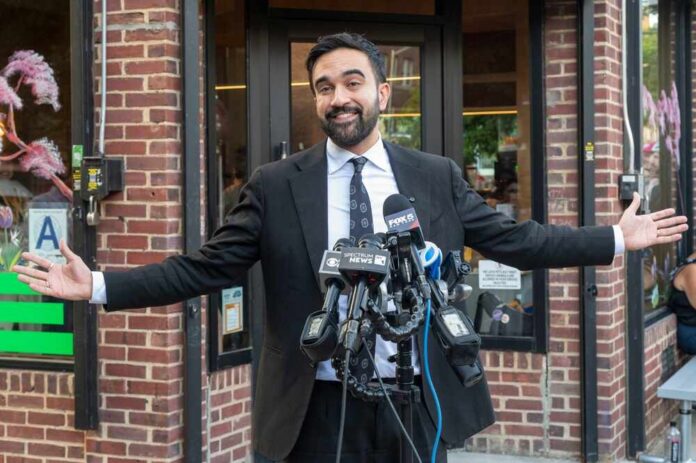
On July 9, 2026, New York City Mayor Zohran Mamdani grabbed a shovel alongside corporate and political leaders to break ground on the new 2 World Trade Center tower, the future global headquarters for American Express. At the ceremony, speakers framed the site as “sacred ground” and a symbol of resilience, tying the project to the memory of 9/11 victims and a supposed return to greatness for lower Manhattan. Officials highlighted that this is the last major commercial office tower planned for the rebuilt World Trade Center campus, marking what they call a completion of the long post-attack rebuilding effort.
Project boosters leaned hard on economic claims. Mayor Mamdani and American Express leaders said the construction will create more than 3,200 direct and indirect construction jobs and drive nearly $6 billion into New York City’s economy. They added that the building, once open, will host about 10,000 American Express employees in modern office space, presenting it as a long-term anchor for downtown business activity. Supporters also touted its role in strengthening the campus as a “global destination” for business and culture, fitting a familiar pattern where large corporate projects are sold as engines of broad prosperity.
Economic impact claims and missing details
The economic numbers around this project do not fully line up, raising fair questions for taxpayers and local workers. Newsday reports Mayor Mamdani cited an $11.4 billion “injection” into the local economy tied to American Express’s relocation, but the company’s own press release instead lists projected contributions of $5.9 billion to New York City and $6.3 billion to the state, without spelling out that $11.4 billion figure. These estimates are forward-looking projections for a building not set to open until around 2031, meaning none of these gains are verified today.
Even more important for ordinary New Yorkers, the job picture is thin on specifics. The speeches and press materials highlight “thousands of good jobs” and 3,200 construction positions, but do not provide any breakdown of who gets those jobs, how many will be permanent, or how many workers must be hired locally. There is no detailed public labor agreement released yet that shows local hiring rules, apprentice opportunities, or veteran preference, leaving many to wonder whether the promise of “good jobs” mainly benefits union insiders and big firms instead of the broader community.
Symbolism, corporate power, and conservative concerns
The timing and language around the ceremony carry heavy symbolic weight. The groundbreaking comes just ahead of the 25th anniversary of the September 11 attacks, and city leaders repeatedly described the site as “sacred ground” that honors the victims. Yet the available evidence focuses on a corporate headquarters tower, modern amenities, and high-end office space, with no clearly defined new memorial component built into this project. For many conservatives, this raises a simple question: is Ground Zero being treated more as prime commercial real estate than as hallowed ground for American lives lost to terrorism?
NYC Mayor Zohran Mamdani breaks ground at the site where Islamic terrorists attacked the World Trade Center on 9/11.
‘2 World Trade Center’, projected to be completed in 2031, sits on the site of the 2nd tower that was destroyed nearly 25 years ago. pic.twitter.com/9QV26SMYcB
— ᶠᵃⁿ Karoline Leavit (@fankaroline_) July 10, 2026
Broader research on post-9/11 redevelopment in New York City shows a long track record where big-dollar economic impact studies for disaster-area projects are often inflated or later contradicted by audits. Federal reviews of past “Liberty Zone” incentives found billions in rebuilding funds went to large financial and real estate interests, while long-term local employment gains remained unclear. The new 2 World Trade Center fits this pattern: a major private tower sold as a cure-all for the local economy, with glowing projections and patriotic language, but very little hard oversight in public view. For readers who value limited government, honest numbers, and real respect for the dead, this project deserves close watching, not blind trust.
Sources:
twitchy.com, youtube.com, newsday.com, governor.ny.gov, instagram.com, finance.yahoo.com, everycrsreport.com