When a progressive comedian skewers a progressive governor on live television, you know California’s failures have transcended partisan spin into undeniable reality.
Story Snapshot
- Bill Maher confronted his friend Governor Gavin Newsom on air about California’s bureaucratic disasters, from housing permits taking 627 days to high-speed rail costs ballooning toward $128 billion
- The HBO host compared modern California unfavorably to 1930s America, noting the Empire State Building was completed 217 days faster than current housing approval timelines
- Wildfire victims remain in temporary housing a year after Los Angeles fires, with only dozens of homes rebuilt despite California’s massive tax revenues
- Water management drew sharp criticism as almond farming consumes roughly 90 percent of California’s water while residents face drought restrictions
- The February 2026 interview went viral as conservatives highlighted a rare moment of progressive self-critique on governance failures
When Friends Don’t Let Friends Govern Badly
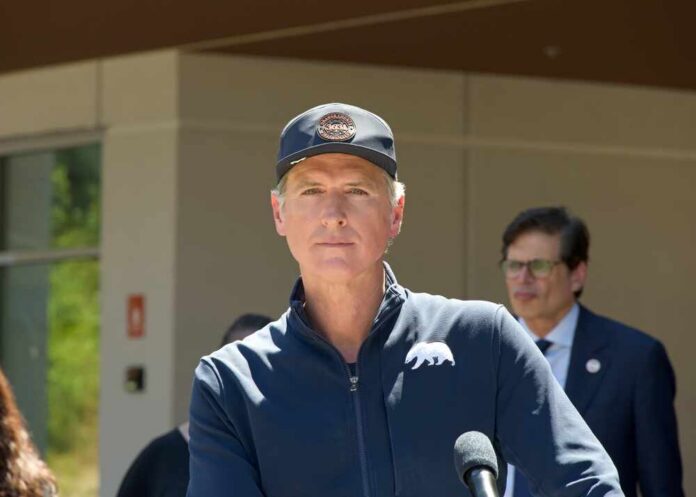
Bill Maher sat across from California Governor Gavin Newsom and delivered what political allies rarely offer: brutal honesty. The Real Time host methodically dismantled the Golden State’s performance on housing, infrastructure, wildfire recovery, and resource management. Maher’s credentials as a self-described progressive gave his critique unusual weight. This wasn’t partisan opposition research; this was an intervention. The interview aired amid California’s 2026 fire season, which had already consumed 19,000 acres, underscoring the urgency of Maher’s questions about why disaster recovery moves at glacial speed in America’s wealthiest state.
The Permit Labyrinth That Makes Building Impossible
Maher confronted Newsom with a damning statistic: building a single home in California requires navigating 87 different permits over 627 days. The comedian offered historical context that stung—the Empire State Building rose in 410 days during the Great Depression. His satirical hypothetical landed hard: Mount Rushmore carved under California’s current regulatory regime would take half a century. Newsom had no effective rebuttal. The layered bureaucracy spans planning commissions, utility providers, fire departments, building inspectors, and public works departments, each adding delays that turn housing construction into an endurance test rather than a solution to California’s affordability crisis.
High-Speed Rail to Nowhere at Any Price
California’s high-speed rail project became Maher’s exhibit B in governmental dysfunction. Launched in 2008, the project has consumed $15.7 billion while projections suggest eventual costs could hit $128 billion for a system that remains largely unbuilt. Maher’s assessment—”California spends money and gets nothing”—captured the frustration of taxpayers watching billions evaporate into consultants, environmental reviews, and revised timelines. The contrast with countries that actually complete infrastructure projects made California’s excuses about progressive intentions ring hollow. Results matter more than rhetoric, and the rail project delivers neither trains nor accountability.
Wildfire Victims Still Waiting While Bureaucrats Deliberate
The human cost of regulatory excess became personal when Maher pressed Newsom on wildfire rebuilding. A year after Los Angeles fires devastated communities, only dozens of homes had been reconstructed. Victims remain in temporary housing while navigating the same permit gauntlet that makes normal construction nightmarish. Early 2026 brought 19,000 acres already burned, yet the state’s response infrastructure remains paralyzed by its own procedures. Newsom defended policies but couldn’t defend outcomes. Fire doesn’t wait for planning commission meetings, and families living in limbo don’t care about process explanations when they need roofs over their heads.
Water management revealed California’s peculiar priorities—individual conservation demanded while industrial agriculture proceeds unchecked. Maher highlighted that almond farming uses approximately 90 percent of California’s water during perpetual droughts spanning two decades. Residents face restrictions on lawn watering and car washing while vast acreage dedicated to almonds receives irrigation. The math doesn’t add up for homeowners asked to sacrifice while commercial interests maintain business as usual. Newsom’s progressive credentials offer no answers when basic resource allocation defies common sense and proportionality in crisis conditions.
Progressive Governance Meets Progressive Critique
Maher’s willingness to challenge his political ally distinguished this interview from typical friendly media appearances. The host described California’s problems as “unforced errors” stemming from uber-progressive governance that prioritizes identity politics and virtue signaling over functional administration. His comparison of California to a “robotic” state ignoring common sense resonated because it came from someone who shares progressive values but demands competent execution. Newsom’s national ambitions face fresh scrutiny when even sympathetic platforms question whether California serves as model or cautionary tale for Democratic governance.
WATCH: A Cocky Gavin Newsom Gets HAMMERED by His 'Friend' Bill Maher on Multiple Damning Failures During Surprisingly Tough Interview https://t.co/cbB3hUTTdm #gatewaypundit via @gatewaypundit
— Jean Langer (@DeannieG) May 3, 2026
The interview’s viral spread through conservative media channels demonstrated hunger for validation that California’s failures aren’t partisan imagination but observable fact. When a progressive comedian systematically documents progressive policy failures, it confirms what common sense already suggested: good intentions without accountability produce expensive disasters. California’s high taxes fund low performance, its regulations strangle rather than protect, and its priorities serve ideological commitments over constituent needs. Newsom’s friendship with Maher couldn’t shield him from questions that demand answers, and his responses revealed the emptiness behind California’s progressive branding.