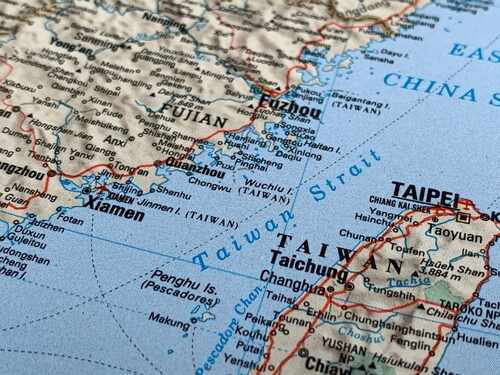
Taiwan’s worst fear is that great powers will trade its future away in a deal it never gets to join.
Quick Take
- Commentary in Washington and Beijing keeps reviving the idea of a U.S.-China “grand bargain” over Taiwan.
- Taipei sees those proposals as a warning sign that its security could be bargained over above its head.
- The coverage says Chinese pressure has not softened Taiwan’s resistance to coercion or reunification.
- Conservative readers should note the deeper issue: weak deterrence invites more pressure, not less.
Why Taiwan Sees the Debate as Dangerous
The latest round of “grand bargain” talk is not happening in a vacuum. It follows years of PLA pressure, political polarization, and repeated reminders that Beijing still treats Taiwan as a core sovereignty issue. For many in Taiwan, the danger is not only military. It is the message that Washington and Beijing might settle a major strategic dispute without Taipei at the table. That is exactly the kind of elite deal-making that fuels distrust of big government and globalist diplomacy.
Analysts say the bargain idea usually takes one of two forms: the United States softens or drops its defense commitment, and China offers something in return, such as lower military pressure or a more stable regional framework. That sounds neat on paper, but the record is not encouraging. Beijing has continued to expand its coercive reach, while Taiwan’s public has shown little appetite for appeasement. The result is a credibility gap that deepens every time the subject resurfaces.
Why the Proposal Keeps Coming Back
It shows that this debate has lasted more than a decade because it appeals to both fear and fatigue. Some U.S. realists argue that compromise could lower the risk of war with a nuclear-armed China. Chinese scholar Wu Xinbo has also described a “third grand bargain” that would require Washington to stop “containing and suppressing” China while Beijing eases its pressure on Taiwan. That framing reveals the real problem: one side wants restraint, the other wants leverage, and Taiwan is caught in the middle.
Charles Glaser’s 2015 proposal sharpened the argument by openly suggesting the United States could end its commitment to defend Taiwan in exchange for Chinese concessions elsewhere in Asia. Critics in the research called that an “impossible price” because it asks Beijing to trade away what it already claims as its own. That is why conservatives skeptical of foreign-policy abstractions should pay attention. Deals built on wishful thinking often weaken deterrence and encourage the very aggression they are meant to prevent.
What the Taiwan Angle Means for U.S. Policy
Taiwan’s leaders and public remain focused on self-defense, international backing, and avoiding a war forced on them by stronger powers. It also notes that even among Taiwanese politics, there are limits to any move that looks like surrender. The island’s major parties disagree on tactics, but neither is eager to hand Beijing an opening. In plain terms, that makes Taiwan less a pawn than a democratic society resisting pressure from both military threats and great-power bargaining.
For Washington, the lesson is straightforward. If the United States wants to preserve credibility with allies like Japan and Australia, it cannot casually signal that Taiwan is negotiable. Brookings’ research warns that Beijing is trying to build an aura of inevitability around unification, while Taiwan’s own polling suggests many citizens already worry about abandonment. A U.S. retreat would not produce calm; it would likely convince Beijing that coercion works and leave smaller partners wondering who is next.
That is why this story matters beyond the Taiwan Strait. Conservatives who are tired of elite management, endless global schemes, and government officials talking over ordinary citizens will recognize the pattern. The people most affected are the ones least heard. Taiwan’s fear is not abstract; it is the fear of being used as leverage in a strategic bargain shaped by distant powers and defended with polished language. Foreign policy that ignores that reality invites instability, not peace.
Sources:
Deal or No-Deal? Taiwan’s Role in the U.S.–China Bargain Debate
United States-China grand bargain, Taiwan security, Wu Xinbo
Taipei rejects and analysts doubt report US would consider grand bargain
The Impossible Price of a U.S.-China Grand Bargain: Dumping Taiwan
U.S.-China Grand Bargain: A Hard Choice Between Military Competition and Accommodation
What a US-China grand bargain would mean for Southeast Asia