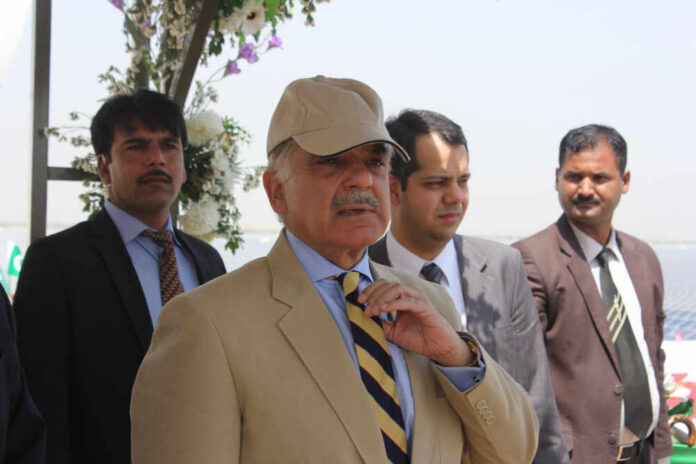
As Pakistan’s prime minister heads to Beijing amid the Iran war, China is quietly tightening its grip on the Gulf while American taxpayers and energy security are left exposed.
Story Snapshot
- Pakistan’s Shehbaz Sharif is visiting China for high-level talks that mix economic deals with war-time diplomacy around Iran.
- Beijing and Islamabad are positioning themselves as peace brokers in the Gulf while expanding their own oil and trade leverage.
- China uses the visit to deepen its “all-weather” partnership with Pakistan, locking in long-term projects that rival U.S. influence.
- The Iran conflict and Strait of Hormuz tensions show how globalist entanglements and weak Western policy can endanger American energy and security.
China-Pakistan Summit Comes as Iran War Roils the Gulf
Pakistani Prime Minister Shehbaz Sharif is set to visit China from May 23 to 26 for meetings with President Xi Jinping and Premier Li Qiang, a trip Pakistani media describe as an “important” official visit with a packed agenda of strategic talks and economic engagement.[1] The visit lands in the middle of a dangerous Iran war that has rattled global oil markets and raised the stakes in the Strait of Hormuz, turning routine Pakistan-China summitry into a stage for crisis diplomacy.
Earlier this spring, Pakistan’s Deputy Prime Minister and Foreign Minister Ishaq Dar met China’s top diplomat Wang Yi in Beijing, with both sides publicly vowing to “strengthen strategic communication and coordination” and to “jointly advocate for peace and justice” as they watched the Iran conflict escalate.[2] That same channel now frames Sharif’s Beijing trip, with commentators in the region linking his travel to discussions on de-escalation, security of energy routes, and possible roles in brokering talks between Washington, Tehran, and regional states.
Economic Deals, Digital Ties, and the CPEC Power Play
Pakistani and Chinese reporting emphasizes that Sharif’s visit is not just about war, but about cash, technology, and long-term leverage. Islamabad’s curtain-raiser language for his earlier 2025 China trip highlighted “all-weather” partnership, the second phase of the China-Pakistan Economic Corridor, and business and investment engagement. Coverage of the new May 2026 visit again points to a business-to-business forum and expanded cooperation in trade, infrastructure, and digital connectivity, alongside traditional strategic coordination.
Analysts note that Pakistan expects to sign dozens of memoranda of understanding worth billions of dollars, including investments tied to special economic zones and new corridor projects. A crowd-sourced listing of Sharif’s foreign travel underlines how often Beijing features in his diplomacy, showing repeated China visits over his premiership and underscoring that these summits are part of an ongoing pattern rather than one-off photo opportunities.[4] For China, every new tranche of corridor projects deepens dependence, locks in routes for Gulf energy, and builds an economic sphere where Western leverage, including American sanctions, becomes harder to wield.
China and Pakistan Float a Peace Framework Centered on the Gulf
China and Pakistan have already placed their marker on the diplomatic table with a five-point initiative for restoring peace and stability in the Gulf and Middle East. In a March 31 meeting in Beijing, Wang Yi and Ishaq Dar jointly called for an “immediate cessation of hostilities,” rapid peace talks, respect for the sovereignty and security of Iran and Gulf states, and strict protection of civilians and nonmilitary targets.[4] Their document also demanded an end to attacks on energy, power, and nuclear infrastructure and called out threats to desalination plants and shipping.
The initiative singles out the Strait of Hormuz as a vital global shipping route, urging protection of stranded vessels and crew and a quick restoration of normal commercial passage.[4] It anchors all this in the “primacy” of the United Nations Charter and “true multilateralism,” language that conveniently sidelines American-led security frameworks in favor of institutions where China and Russia routinely seek to dilute U.S. influence.[4] While there is no hard evidence that Washington or Tehran has granted Beijing and Islamabad any formal mediator mandate, their coordinated peace rhetoric positions them as alternative brokers just as the West absorbs the economic and political cost of the conflict.[2][4]
War Overshadows, But Does Not Replace, China’s Long Game
Regional outlets are already framing Sharif’s Beijing trip as overshadowed by the Iran war, playing up the drama around airstrikes, tanker threats, and big-power maneuvering.[1][2][3] Yet the public evidence does not show a detailed agenda that gives Iran pride of place over economic deliverables; instead, it shows a familiar pattern where China-Pakistan summits are built around trade, investment, and corridor expansion, with security crises folded into those broader strategic conversations.[2][4] That uncertainty lets commentators overstate the war angle even as Beijing quietly locks in long-term gains.
Pakistan PM Shehbaz Sharif to Visit China Amid Reports Linking Trip to Iran War Diplomacy, Including Coordination Between Major Powers and Pakistan’s Mediation Efforts. pic.twitter.com/nJsBLFHIDD
— ME24 – Middle East 24 (@MiddleEast_24) May 21, 2026
For American readers, the lesson is less about Pakistan’s internal politics and more about the cost of years of drift. While the United States has been distracted by domestic fights and bloated global commitments, China has cultivated “all-weather” partnerships, secured access to energy routes we still rely on, and now markets itself as a responsible peace broker in a war that directly affects pump prices in our towns.[2] When Beijing and Islamabad talk about protecting shipping, infrastructure, and “true multilateralism,” they are shaping a world where American leverage shrinks, and our families feel the pinch through higher energy costs and greater strategic risk.
Sources:
[1] Web – PM set for key China visit next month – The News Pakistan
[2] Web – China, Pakistan Coordinate On Iran Talks As War Disrupts Global …